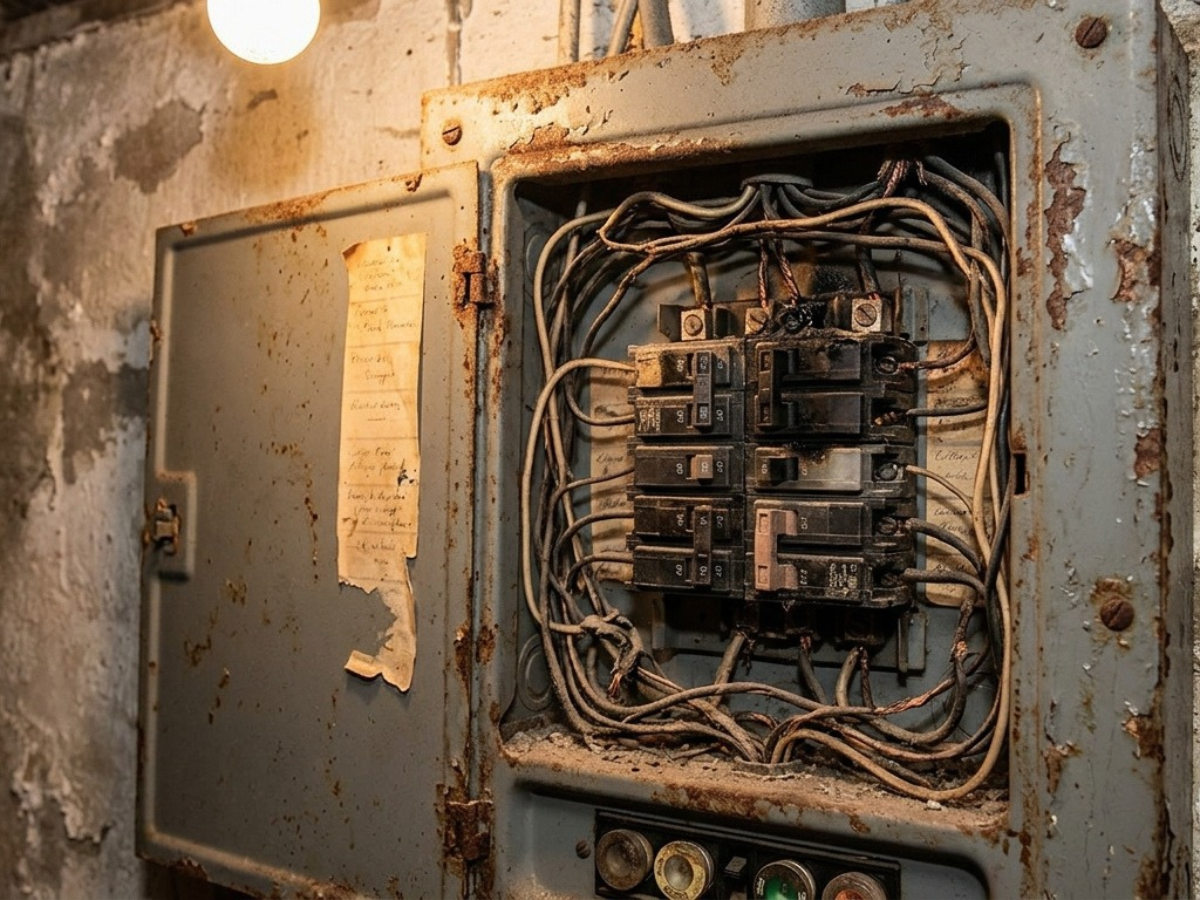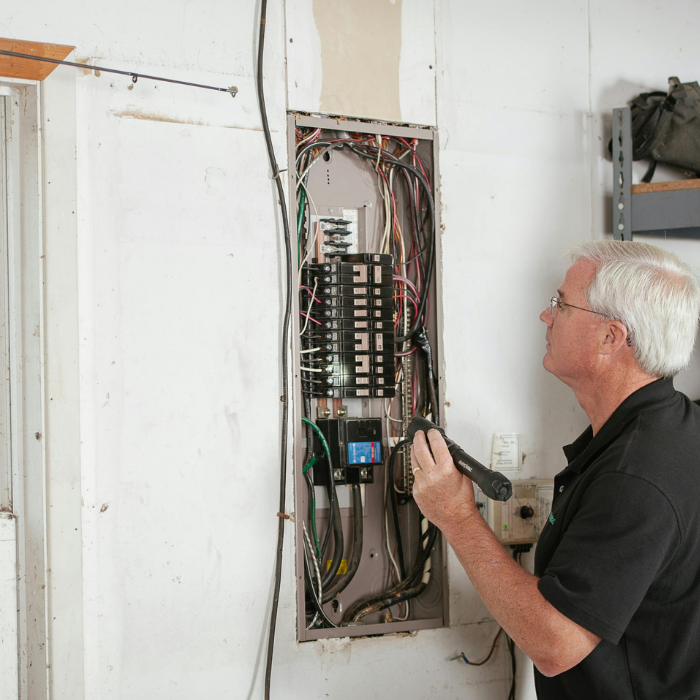

Flickering lights, tripping breakers, and outlets that stopped working are rarely just nuisances. They are early warning signs. A professional electrical safety inspection uses a structured five-test sequence to uncover hidden wiring defects, code violations, and capacity shortfalls before they cause shocks, fires, or a failed real estate closing. Whether you are buying, selling, or maintaining an older Chicago bungalow or two-flat, this guide explains what each test checks, what the results mean, and how corrections get made.
Why an Electrical Safety Inspection Goes Beyond a General Home Inspection
General home inspectors document visible symptoms. A licensed electrician verifies the underlying causes and measures actual system performance. That distinction matters for four reasons.
Life safety: Faulty wiring is one of the leading causes of residential fires. A methodical test sequence identifies problems before a fault event occurs.
Code compliance: The National Electrical Code requires GFCI protection in wet and exterior locations (NEC 210.8) and AFCI protection on most 120-volt branch circuits in living areas (NEC 210.12). Chicago local amendments can add further requirements.
System capacity: Load and voltage measurements reveal whether your panel and branch circuits can handle HVAC upgrades, kitchen appliances, and EV chargers without nuisance trips or overheating.
Local context: Many Chicago homes use metal conduit instead of nonmetallic sheathed cable. Grounding in these systems depends on conduit continuity and bonding to the metal water service, details that require familiarity with Chicago housing stock.
Test 1: Service Panel and Breaker Evaluation
Your electrical panel is the nerve center of the entire system. A compromised panel is one of the most consequential defects found in older homes.
The electrician checks the main disconnect for accessibility and clear labeling, inspects breakers for heat damage, incompatible brands, and double-lugged conductors, verifies that wire gauge matches breaker ratings, and confirms that neutrals and grounds are properly separated in subpanels.
Common corrections: Replace damaged or obsolete breakers, update circuit directory labels, install a new panel when circuits are overcrowded, and separate neutrals and grounds in subpanels.
Test 2: GFCI and AFCI Protection Verification
GFCI protection cuts power within milliseconds of a ground fault, the condition behind most electrical shock deaths. AFCI protection detects arcing signatures associated with damaged wiring, the most common electrical cause of residential fires.
The electrician verifies GFCI coverage in kitchens, bathrooms, garages, unfinished basements, exterior outlets, and any receptacle within six feet of a sink (NEC 210.8). AFCI coverage is confirmed in bedrooms, living rooms, and hallways (NEC 210.12). Both devices are trip-and-reset tested to confirm they are actually functional, not just present.
Many Chicago homes were built before these protections became code requirements. Upgrades are common during real estate transactions and remodeling projects.
Common corrections: Install GFCI receptacles or breakers in required locations, upgrade to AFCI breakers in living areas, and install dual-function AFCI/GFCI breakers where both requirements apply to the same circuit.
Test 3: Grounding and Bonding Continuity
Grounding and bonding direct fault current back to the source so breakers trip when they should. Without a complete, low-resistance ground path, fault current can travel through a person who touches an energized metal surface instead.
In Chicago conduit systems, the metal conduit serves as the equipment grounding conductor. A single corroded coupling or loose fitting can break that path without any visible sign. The electrician checks bonding jumpers at the water service and meter, tests conduit continuity with a low-resistance meter, and inspects every receptacle for an open ground condition.
Common corrections: Install or repair bonding jumpers at the water service, add a supplemental ground rod if required, and replace conduit fittings or metal boxes that break continuity.
Test 4: Circuit Load and Voltage Performance
Modern households draw significantly more power than homes were designed for even twenty years ago. This test measures whether your electrical system can meet actual demand without overheating or failing.
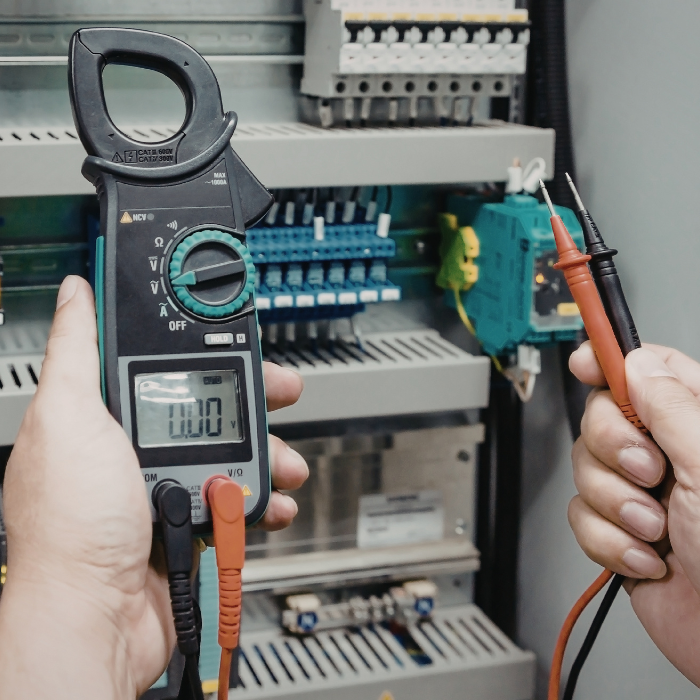
The electrician measures current draw on representative circuits under real load conditions, records voltage at rest and under load (a significant drop indicates undersized wire or a loose termination), and calculates total service demand to determine whether 100-amp, 150-amp, or 200-amp service is adequate. Chicago winters and summers create peak demands from space heaters, window units, and sump pumps. The inspection checks whether those seasonal loads share circuits with refrigerators or other critical appliances.
Homes being upgraded with new HVAC or a Level 2 EV charger frequently discover during this phase that existing service is insufficient.
Common corrections: Add dedicated circuits for high-draw appliances, balance loads across phases to reduce dimming, and upgrade service capacity when calculations justify it.
Test 5: Receptacle, Switch, and Fixture Testing
Individual devices reveal patterns that panel testing alone cannot see, and frequently uncover wiring errors from past DIY work.
The electrician uses a plug-in tester to check every outlet for reverse polarity, open neutrals, and bootleg grounds. Reverse polarity places voltage on the wrong conductor and can damage electronics and create shock risk at lamp sockets. Physical condition is also checked: cracked faces, burn marks, and worn contacts that cause arcing under load. Every switch is operated and listened to for arcing sounds. Dimmers are verified for compatibility with installed LED loads. Outdoor receptacles are confirmed to have weather-resistant ratings and in-use covers.
Common corrections: Replace two-prong receptacles with grounded three-prong types where a ground path exists, or install GFCI receptacles with proper labeling where no ground conductor is present. Swap incandescent dimmers for LED-rated models. Install tamper-resistant, weather-resistant receptacles with in-use covers outdoors.
Additional Checks Worth Knowing About
Beyond the five core tests, a thorough inspection often includes smoke and CO alarm placement verification per NFPA 72, a whole-home surge protection assessment, EV charger readiness review for panel capacity and conduit pathways, and panel schedule labeling for emergency clarity.
When to Schedule an Electrical Safety Inspection
- Before buying or listing a home
- After adding major appliances, finishing a basement, or installing new HVAC
- When you notice frequent breaker trips, flickering lights, warm outlets, or burning smells
- After a storm, flood, or lightning strike
- Every 3 to 5 years in older homes, or annually with a preventive maintenance plan
If you notice a burning smell, shocks from metal fixtures, or lights that dim when the microwave runs, contact our emergency service line rather than waiting for a scheduled visit.
Safety and Savings Plan
Our Safety and Savings Plan at $9.95 per month includes annual whole-home electrical safety evaluations, a lifetime warranty on new installations, a two-year warranty on all repairs, no service fees, priority scheduling ahead of non-members, and 15% off all services and products. The plan is transferable, which can add value when selling your home. Members in Chicago and the suburbs get front-of-line scheduling when demand spikes after severe weather.
Frequently Asked Questions
Do general home inspectors perform all five of these tests? No. General inspectors flag visible anomalies. A licensed electrician performs deeper diagnostic testing, measures load and voltage, verifies code compliance, and provides repair pricing on the spot.
How long does a full inspection take? Most homes require 60 to 120 minutes. Older homes or those with multiple issues take longer.
Are GFCI and AFCI upgrades actually required? In locations specified by NEC 210.8 and 210.12, yes. Chicago local amendments may expand those requirements. Your report will cite the applicable code sections.
What happens if major problems are found? You receive a prioritized report with transparent, line-item pricing. Many findings are corrected the same day. Larger projects such as panel replacements or whole-house rewiring are scheduled with permit coordination handled by Electric Work Force Inc.
The Bottom Line
A professional electrical safety inspection is the most efficient way to confirm that your home’s wiring, panel, grounding, and protection devices are working the way they should. The five tests together give you a complete picture of your system’s condition, code compliance, and capacity for the demands of modern Chicago living. That is the fastest path to a safer home and a smoother real estate transaction.
Schedule your inspection today by calling Electric Work Force Inc at (708) 968-1904 or contacting us online.
Subscribe to our YouTube channel!