There’s a reason so many buyers fall in love with Chicago’s older housing stock. A 1920s bungalow on the Northwest Side, a greystone two-flat in Logan Square, a vintage condo with original plaster ceilings and oak floors… these homes have a character that new construction simply can’t replicate. But underneath all that charm, the electrical systems in many of these properties are decades past their useful life. If you’re doing your due diligence before closing, getting a proper electrical inspection on your older Chicago home isn’t optional. It’s one of the smartest moves you can make. Here, we present your guide to electrical inspection for an older home in Chicago.
Why Chicago’s Older Homes Carry Unique Electrical Risk
Chicago’s housing stock skews old. The city’s bungalow belt alone contains an estimated 80,000 single-family homes, most built between 1910 and 1940. Greystones, two-flats, and courtyard buildings largely date to the same era. The electrical systems in these homes were designed for a world without central air conditioning, dishwashers, EV chargers, or the dozen devices plugged into every room today.
That mismatch between original design capacity and modern electrical demand is exactly where problems start. And beyond the functional concerns, certain types of vintage wiring can complicate, or in some cases disqualify, homeowner’s insurance coverage. That’s something buyers often don’t discover until after closing.
The 3 Wiring Types Found in Chicago Older Homes
| Wiring Type | Era | Risk Level | Typical Resolution |
|---|---|---|---|
| Knob and tube | Pre-1950 | High | Full or partial rewire |
| Aluminum wiring | 1960s to 70s | Moderate | Remediation at connections or rewire |
| Early copper, small panel | 1950s to 80s | Watch list | Panel upgrade; assess wiring |
Knob and Tube Wiring
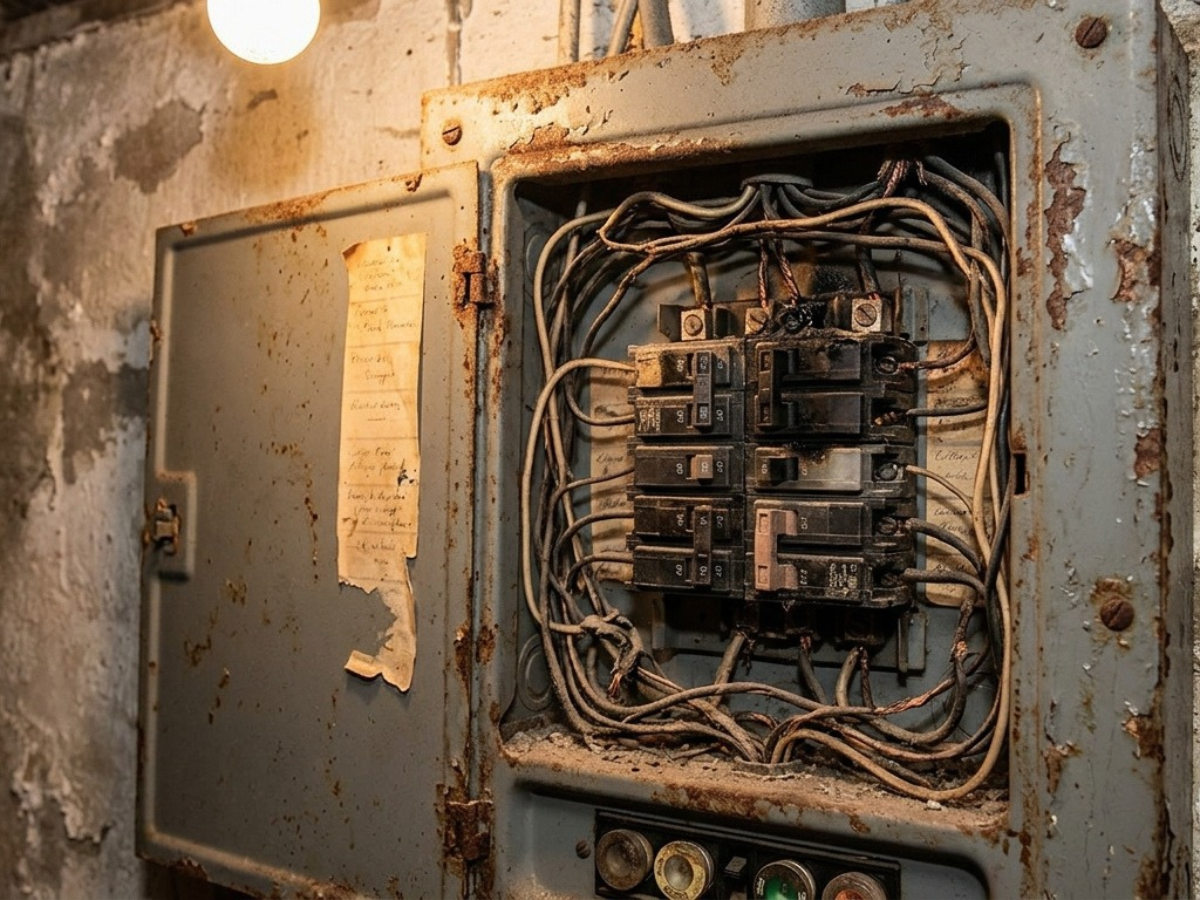
Knob and tube is the wiring type that most commonly stops a real estate deal in its tracks, and for good reason. It has no ground wire, uses cloth insulation that becomes brittle and flammable with age, and was never rated for the electrical loads of a modern household. Finding knob and tube in a pre-1950 Chicago home isn’t unusual. Finding it still active and in use is a serious red flag.
Many insurers will refuse to cover a home with active knob and tube wiring, or will charge significantly higher premiums. If an inspector notes its presence, your very next call should be to a licensed electrician to assess how much of the system is still live.
Aluminum Wiring
During a copper shortage in the 1960s and early 1970s, builders switched to aluminum wiring as a cost saving measure. It’s common in Chicago condos and multi-unit buildings from that era. The issue isn’t the wire itself. It’s the connections. Aluminum expands and contracts differently than copper, which causes connections to loosen over time, creating heat and a potential fire hazard at outlets, switches, and the panel.
Aluminum wiring can often be remediated rather than fully replaced, but it requires work at every connection point by a licensed professional.
Early Copper With an Undersized Panel
Not all vintage wiring is inherently dangerous, but copper wiring installed in a home still running a 60 amp or 100 amp panel is a capacity problem waiting to surface. Homes with Federal Pacific or Zinsco panels, both known for breaker failure issues, fall into a particularly urgent category. These panels don’t reliably trip during overloads, which removes the safety net the whole system depends on.
If the home you’re considering has one of these panels, budget for a replacement. Electric Workforce handles panel upgrades and breaker services throughout the Chicago area.
Home Inspector vs. Licensed Electrician: What’s Actually Being Checked?
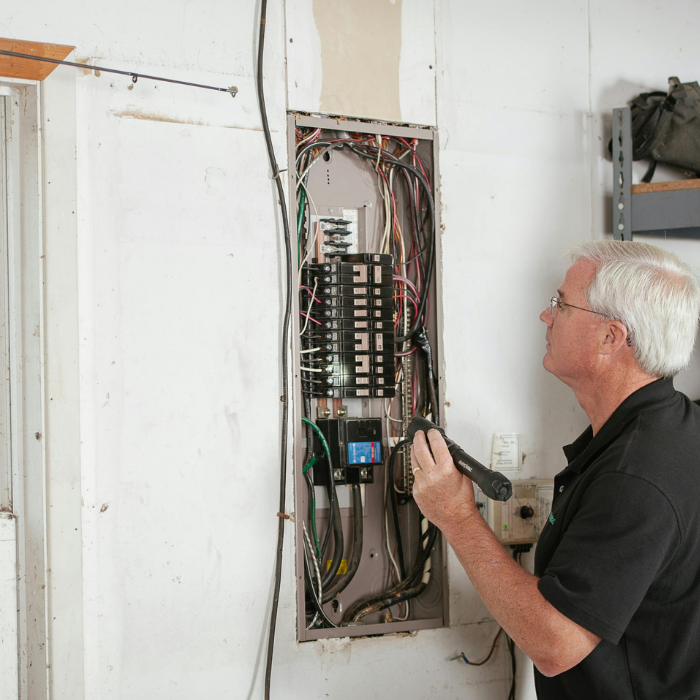
A home inspector performs a visual survey of accessible electrical components. They are not licensed to test circuits under load, open walls, or assess wiring type in depth. A licensed electrician does all of that and more.
What a Home Inspector Looks At
A home inspector will check the panel for obvious issues, test outlets and GFCI protection, look for visible exposed wiring, and flag anything immediately hazardous. That’s genuinely useful, but it’s also the limit of their scope. They’re not going to tell you whether the 100 amp panel is adequate for the home’s square footage, whether the wiring behind the walls is knob and tube, or whether the circuits are properly mapped and balanced.
“A home inspection is a snapshot. An electrical inspection is a diagnosis.”
What a Licensed Electrician Looks For
A licensed electrician conducting a pre-purchase assessment will evaluate panel amperage and condition, identify wiring type and approximate age, test circuit capacity and load, check grounding throughout the home, and flag any unpermitted or DIY electrical work. Critically, they can provide a written report. One you can bring to the negotiating table.
Should You Hire Both?
Almost always, yes. A separate pre-purchase electrical walkthrough typically costs $150 to $300. Given that the issues it might uncover can run into the tens of thousands of dollars, it’s among the highest return inspections you can commission. The Electric Workforce team offers electrical diagnostics and repair assessments for buyers across the Chicago area.
Red Flags to Look For, and How to Use Them in Negotiations
The 6 Electrical Red Flags That Should Pause Any Closing
- Active knob and tube wiring. Its mere presence may be noted; active use is a different matter entirely. If it’s powering circuits, you’re looking at a rewire.
- Federal Pacific or Zinsco panel. Both have documented histories of breaker failure. Replacement is non-negotiable for safety and insurability.
- Fuse box still in service. A fuse-based system signals the electrical hasn’t been meaningfully updated since before the Kennedy administration. It also limits your capacity and will need to go.
- Double tapped breakers. Two wires connected to a single breaker is a code violation in most cases and indicates the panel is already overloaded.
- Ungrounded outlets throughout the home. Two-prong outlets in a home with modern appliances is a safety and functionality problem, and rewiring to add grounding is a significant undertaking.
- Evidence of unpermitted or DIY electrical work. Junction boxes in attics wired incorrectly, mismatched wire gauges, or circuits that don’t appear on any diagram all suggest work was done outside the permit process, which means it was never inspected.
Using the Electrician’s Report at the Negotiating Table
A written assessment from a licensed electrician gives you documented, dollar-quantified leverage. You can request a seller credit, a price reduction, or seller-paid remediation before close. Illinois real estate attorneys routinely advise buyers to pursue this route when electrical issues are material. The report removes subjectivity from the conversation. It’s not your concern versus the seller’s assurance. It’s a professional estimate in black and white.
What Does It Cost to Rewire an Older Home in the Chicago Area?
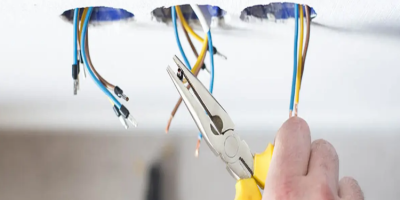
The cost to rewire an older Chicago home typically ranges from $8,000 to $20,000 for a full rewire, depending on home size, accessibility, and whether a panel upgrade is included.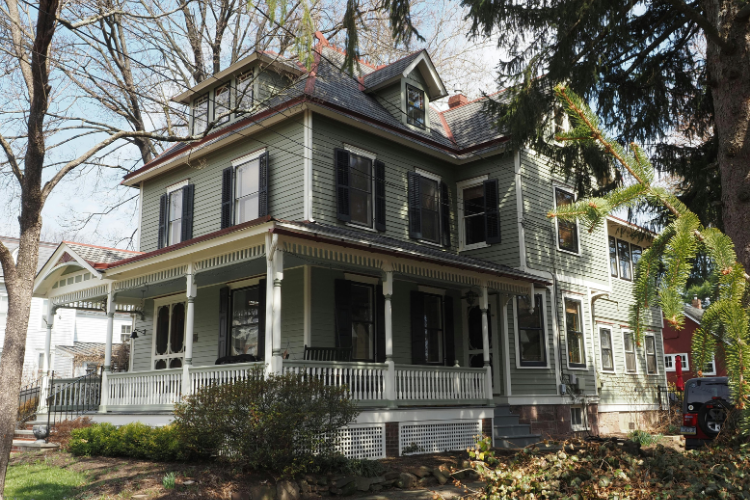
Rewiring Cost Ranges by Home Type
A typical Chicago bungalow (1,200 to 1,600 sq ft) runs roughly $8,000 to $14,000 for a full rewire when walls are accessible during a renovation. A greystone unit or larger two-flat can reach $15,000 to $25,000. Partial rewires, addressing specific circuits or a single floor, cost considerably less but may not resolve underlying capacity issues.
Cook County permit fees add to the total, and projects in occupied homes where walls can’t be opened easily cost more due to the fishing and patching required. Electric Workforce provides rewiring services with clear, upfront estimates before work begins.
Panel Upgrade Costs
Upgrading from a 100 amp to a 200 amp panel typically runs $1,500 to $3,500 in the Chicago area, depending on whether the meter socket needs replacement and what the utility requires. This upgrade is increasingly essential for anyone planning to add an EV charger, a heat pump, or a serious home addition. See panel and breaker services here.
Folding Electrical Into Your Renovation Budget
If you’re buying a fixer-upper with a renovation in mind, electrical work belongs at the very top of the sequencing list, before new drywall, before finish work, before cabinets. Doing it in reverse costs you twice. Financing options are available for larger electrical projects, which can make it easier to handle rewiring as part of a broader renovation budget rather than a separate out-of-pocket expense.
Planning Ahead: Modern Upgrades Worth Considering When You Rewire
A rewire is also the most cost-effective moment to future-proof your home. Three upgrades worth discussing with your electrician while the walls are open:
EV charger rough-in. Running a dedicated 240V circuit for a Level 2 charger during a rewire adds relatively little incremental cost compared to doing it as a standalone project later. Electric Workforce installs EV chargers throughout the Chicago suburbs.
Outdoor lighting circuits. Adding exterior circuits for landscape, security, or porch lighting is straightforward when wiring is already being run. Explore lighting installation options here.
Permit compliance. All electrical work in Chicago requires permits and a city inspection. Work done without permits can resurface as a problem when you eventually sell, or during a refinance appraisal. A licensed contractor handles the permit process as part of the job.
Don’t Let Hidden Wiring Issues Derail Your Chicago Home Purchase
Buying an older home in Chicago can be one of the best real estate decisions you make. These properties hold their value, sit in established neighborhoods, and reward buyers who go in with their eyes open. The key is knowing what you’re actually buying. Requesting a dedicated electrical inspection on your older Chicago home before you close gives you the information you need to negotiate from strength, budget accurately, and move in without surprises.
Electric Workforce is a family-owned, licensed and insured electrical company serving Chicago and the surrounding suburbs, with a 4.9-star reputation built on straightforward communication and quality work. Learn more about the team here.
Buying a home in the Chicago area? Schedule a pre-purchase electrical walkthrough with our licensed team. We’ll give you a clear picture of what you’re working with before you close. Check our current coupons page for available savings on major projects.
Subscribe to our YouTube channel!