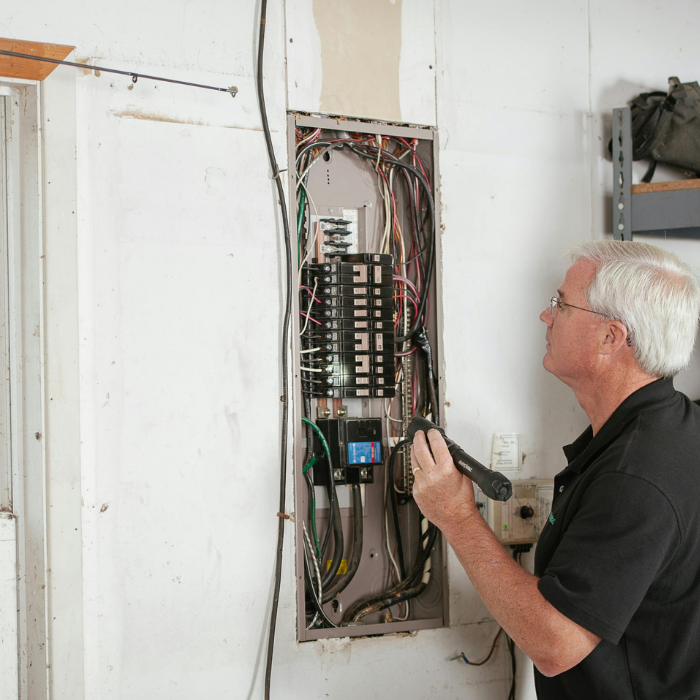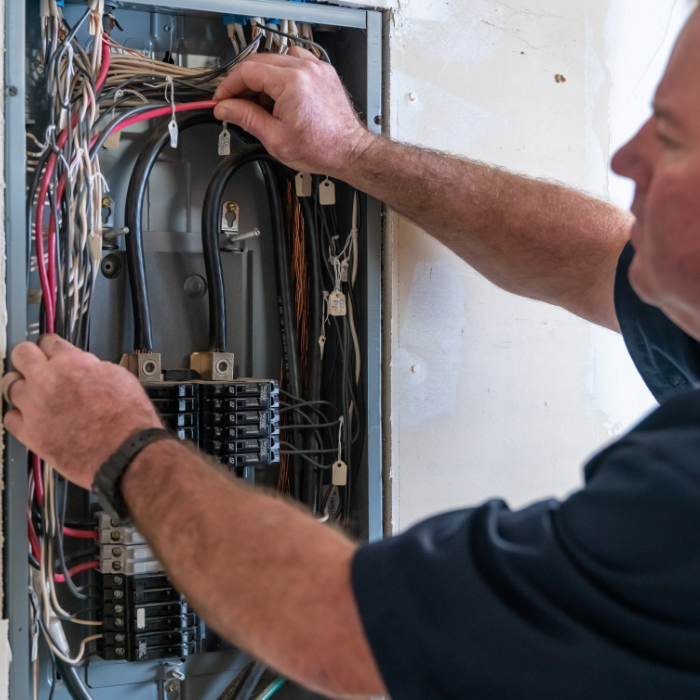
If you live in one of the thousands of Chicagoland homes built between the 1950s and 1980s, there’s a good chance you’ve never given your breaker box a second look. It hums quietly in the basement or garage, and as long as the lights stay on, it’s easy to assume everything is fine. But some older panels were built with known design flaws that can stop them from protecting your home when it matters most. If you’ve ever wondered “is my electrical panel safe?”, this guide will help you find out, and explain when electrical panel replacement in Chicago is the smartest move for your family.
Is My Electrical Panel Safe? The Quick Answer
Your electrical panel may not be safe if it was made by Federal Pacific Electric, Zinsco, or a few other discontinued brands, or if it’s more than 25 years old. These panels deserve a professional inspection, even if they seem to be working normally.
Your panel’s job is simple: when a circuit draws too much current, the breaker trips and cuts power before wires overheat. When a breaker fails to trip, that heat has nowhere to go. The danger is that a faulty panel can look and act completely normal right up until the moment it fails.
Which Electrical Panel Brands Are Considered Dangerous?
The brands most often flagged by electricians and home inspectors are Federal Pacific Electric (FPE), Zinsco, GTE Sylvania, Challenger, and Bulldog Pushmatic. Older split bus panels and fuse boxes are also considered outdated for modern homes.
Federal Pacific Electric (FPE) Stab-Lok Panels
FPE panels were installed in millions of American homes for decades. One certified master inspector advises treating any panel labeled FPE, Federal Pacific, Federal Pioneer, or Stab-Lok as an active safety hazard. The core problem is that when these panels fail, breakers don’t trip, allowing dangerous heat to build up.
By the numbers: An estimated 2,800 fires each year are linked directly to Federal Pacific breaker malfunctions, according to one homeowners insurer.
Zinsco and GTE Sylvania Panels
Zinsco panels were common in homes built or updated in the 1970s. Their aluminum bus bars oxidize over time, and electricians often discover breakers that have melted onto the bus bar and can’t be removed. After GTE Sylvania bought Zinsco, panels sold under the Sylvania name carried the same melting and fusing risks.
Challenger, Bulldog Pushmatic, and Split Bus Panels
Challenger and Bulldog panels are also widely considered hazards. Pushmatic breakers can become stiff and hard to reset with age, and these panels lack a single main shutoff switch. Split bus panels share that last problem: there’s no one breaker that cuts power to the whole house, which makes emergencies harder to manage.
Old Fuse Boxes
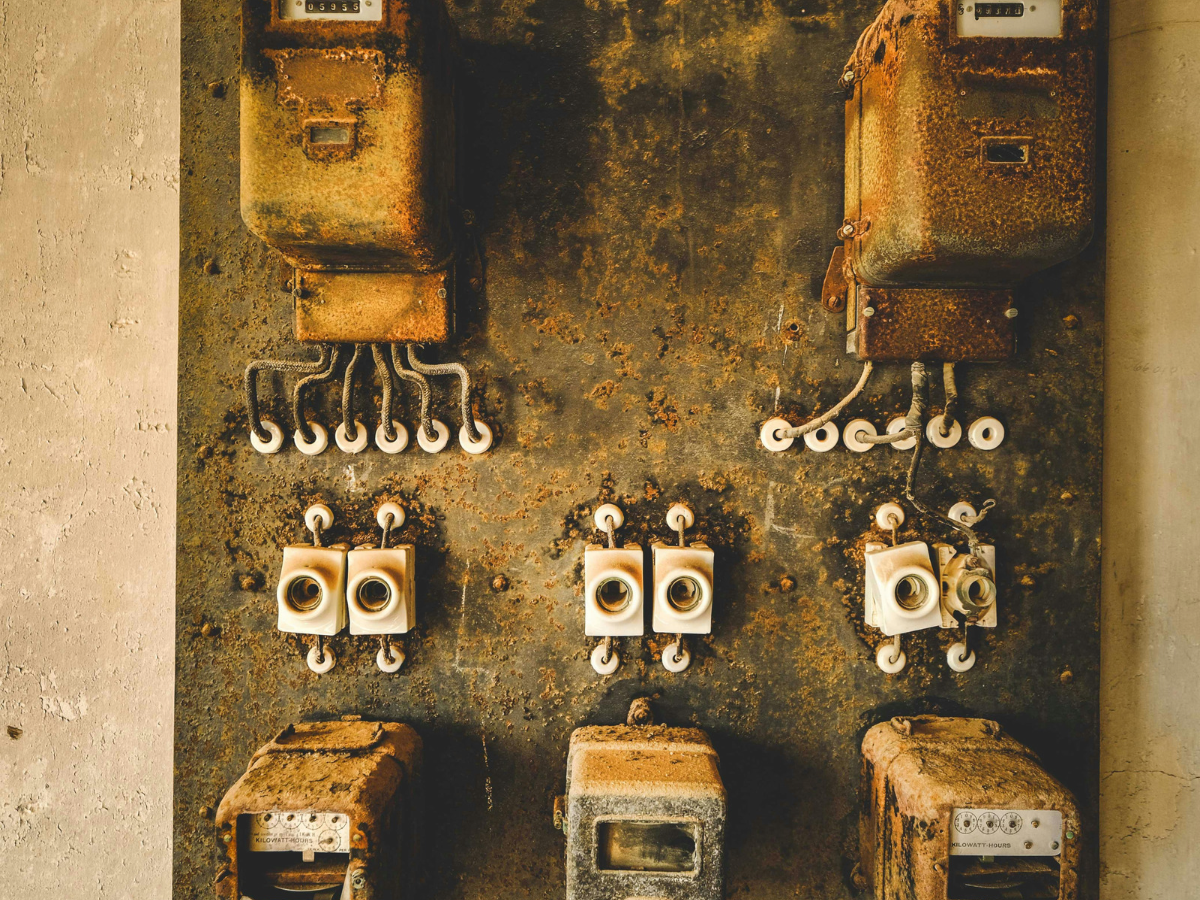
Fuse boxes aren’t defective by design, but they were built for a different era. Many older fuse panels handle only 30 to 60 amps, far below what today’s homes need for central air, kitchen appliances, home offices, and EV chargers. Overloaded fuse boxes also tempt homeowners to install oversized fuses, which defeats their purpose entirely.
How to Tell What Kind of Electrical Panel You Have
You can usually identify your panel brand in a few minutes by checking the label on the panel door or inside the cover. You don’t need tools, and you should never remove the panel cover yourself.
- Locate your panel. In Chicago area homes, it’s usually in the basement, garage, utility room, or a hallway closet.
- Open the outer door. Look for a manufacturer name stamped into the metal or printed on a sticker. FPE panels may say Federal Pacific Electric, Federal Pioneer, FPE, or Stab-Lok.
- Look at the breakers. Red tipped breaker handles are common in FPE panels. Zinsco breakers are often thin and multicolored or black. Pushmatic breakers look like push buttons instead of switches.
- Find the date. A sticker or inspection tag may list the installation year. If your home is more than 25 years old and the panel has never been replaced, assume it’s original.
- Take a photo. A clear picture of the label and breakers makes it easier for an electrician to give you a quick answer.
If you see any of the brands above, or can’t find a label at all, it’s time to have a professional take a closer look.
Warning Signs Your Electrical Panel Needs Attention
Even a panel from a reputable brand can wear out. Experts put the typical life expectancy of an electrical panel at 25 to 40 years. Watch for these red flags:
- Breakers that trip constantly, or never trip at all
- A panel door or cover that feels warm to the touch
- Burning, melting plastic, or “hot” smells near the panel
- Buzzing, crackling, or sizzling sounds
- Scorch marks, rust, or corrosion inside or around the panel
- Flickering or dimming lights when large appliances turn on
- Breakers that won’t stay reset
“A breaker that looks fine can still fail to trip when it matters most.”
If you notice burning smells, smoke, or visible scorching, don’t wait. Treat it as an emergency and call an electrician right away.
Can an Outdated Electrical Panel Affect Home Insurance or a Home Sale?
Yes. Many insurers hesitate to cover homes with FPE or Zinsco panels, and home inspectors routinely flag them during a sale. An outdated panel can lead to higher premiums, denied coverage, or tough negotiations with buyers.
Some homeowners have found they can’t get or renew a policy until a known problem panel is replaced. On the selling side, an inspection report that calls out an unsafe panel often leads buyers to request a credit, demand a replacement before closing, or walk away. Replacing the panel ahead of time removes that obstacle and becomes a selling point instead of a red flag.
Should You Repair or Replace an Unsafe Electrical Panel?
Replacement is the recommended fix for Federal Pacific, Zinsco, and similar panels. Swapping individual breakers doesn’t solve the underlying design problems, and replacement parts for these brands are often hard to find or of questionable quality.
For newer panels from reliable manufacturers, a repair may be enough. A loose connection, a single faulty breaker, or minor corrosion can sometimes be corrected without replacing the whole system. A licensed electrician can tell you which situation you’re in after an inspection.
Replacement also gives you a chance to plan ahead. If you’re thinking about an EV charger, a home standby generator, a kitchen remodel, or central air, a modern panel with more capacity makes those upgrades possible.
What Happens During an Electrical Panel Replacement?
A typical residential panel replacement is completed in a single day. Here’s what to expect:
- Inspection and assessment. The electrician evaluates your current panel, wiring, and power needs.
- Permit and planning. Your contractor pulls the required local permit and coordinates any utility disconnect.
- Power shutoff. Power to the home is turned off while the old panel is removed.
- New panel installation. A modern panel and breakers are installed, with circuits reconnected and properly sized.
- Labeling and testing. Each circuit is labeled clearly and tested.
- Final inspection. A local inspector confirms the work meets code before the job is closed out.
Why Chicago Homeowners Trust Electric Work Force
When it comes to the system that protects your entire home, experience and accountability matter. Electric Work Force is a family owned team of licensed Chicago electricians, fully insured and trained to handle panel upgrades, breaker services, and full rewiring across the city and suburbs.
Homeowners choose the team for a few simple reasons:
- Clear, upfront pricing with no surprises once the work begins
- 24/7 emergency service for urgent electrical problems
- Coupons and financing options that make major projects like panel replacements more manageable
- Future ready upgrades, including EV charger and generator installation, from the same trusted crew
Key Takeaways
- Federal Pacific Electric, Zinsco, GTE Sylvania, Challenger, and Bulldog Pushmatic panels are widely considered unsafe.
- The biggest danger is breakers that fail to trip, allowing heat to build up inside walls and the panel.
- Most electrical panels last 25 to 40 years, so older original panels deserve an inspection even from good brands.
- You can identify your panel by checking the label inside the door, but never remove the cover yourself.
- Outdated panels can cause insurance problems and complicate home sales.
- Replacement, not repair, is the standard fix for FPE and Zinsco panels.
Frequently Asked Questions
How do I know if my electrical panel is dangerous?
Check the label inside the panel door for Federal Pacific, Zinsco, Sylvania, Challenger, or Pushmatic. Warning signs like warm covers, burning smells, or breakers that won’t trip also mean you should call an electrician.
Can I just replace the breakers in a Federal Pacific panel?
No. The problems with FPE panels involve both the breakers and the panel design, so a full panel replacement is the recommended solution.
How long does an electrical panel replacement take?
Most residential panel replacements are finished in one day, though permits and final inspection scheduling can add time.
Do I need a permit to replace an electrical panel in Illinois?
In most Illinois municipalities, yes. A licensed electrician will typically handle the permit and inspection for you.
Protect Your Home Before Problems Start
Your electrical panel is the first line of defense against electrical fires, yet it’s one of the most overlooked parts of any home. If your house is more than 25 years old, or you’ve spotted a Federal Pacific, Zinsco, or other outdated brand, a quick professional inspection can give you real peace of mind. Our team makes electrical panel replacement in Chicago straightforward, safe, and fully up to code. Schedule an electrical panel inspection today, and learn more about our electrical panel replacement in Chicago services.
Subscribe to our YouTube channel!