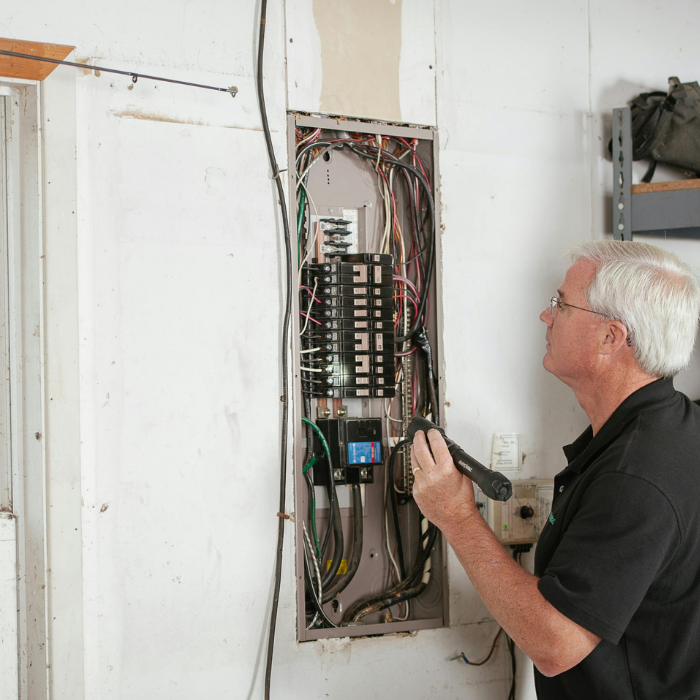
If you are trying to fix a breaker that won’t reset in Chicago, the cause is usually an overload, a short circuit, a ground fault, or an arc fault, and most of these can be narrowed down safely in a few minutes. A breaker that refuses to stay on is not being difficult for no reason. It is doing exactly what it was designed to do: cutting power before overheated wiring turns into something worse. This guide walks you through what to check, how to avoid making the problem worse, and when it is time to call a licensed electrician near Chicago.
If you need help right now, the 24/7 team at Electric Work Force Inc, a licensed Chicago electrician, can diagnose and repair the issue fast.
Why Won’t My Breaker Reset?
A breaker won’t reset when it senses an ongoing overload, short circuit, ground fault, or arc fault on the circuit. Until that underlying issue is cleared, the breaker’s internal safety mechanism will keep tripping to protect your home.
In Chicago’s older bungalows and two-flats, this often comes down to a mix of legacy wiring, undersized circuits, and heavy seasonal appliance use. Space heaters, window units, and holiday lighting can push a general-purpose circuit past what it was built to carry. Here is what typically causes a stubborn breaker:
- Overload from too many devices sharing one circuit
- Short circuit from damaged wiring or a failing appliance
- Ground fault, common on GFCI-protected circuits
- Arc fault, detected by AFCI breakers sensing dangerous arcing
- A failing breaker or a loose panel connection
Two code details matter here. The National Electrical Code requires GFCI protection in kitchens, bathrooms, garages, and outdoor areas (NEC 210.8), and AFCI protection is required on most 120-volt, 15- and 20-amp dwelling circuits (NEC 210.12). If either device trips, the breaker itself may not hold until that device is reset.
If you notice a burning smell, scorch marks, or unusual heat near the panel, skip the troubleshooting steps below. Turn off the main breaker and call an electrician immediately.
The Right Way to Reset a Breaker
Stand slightly to the side of the panel and look away as you flip the switch, just as a precaution. Push the tripped breaker firmly to the full OFF position first; many breakers won’t reset unless you do this. Wait a few seconds, then move it firmly to ON.
If it holds, you are done. If it snaps back toward the middle or trips again immediately, stop resetting it and work through the diagnostic steps below. Repeatedly forcing a reset can overheat wiring and damage connected devices.
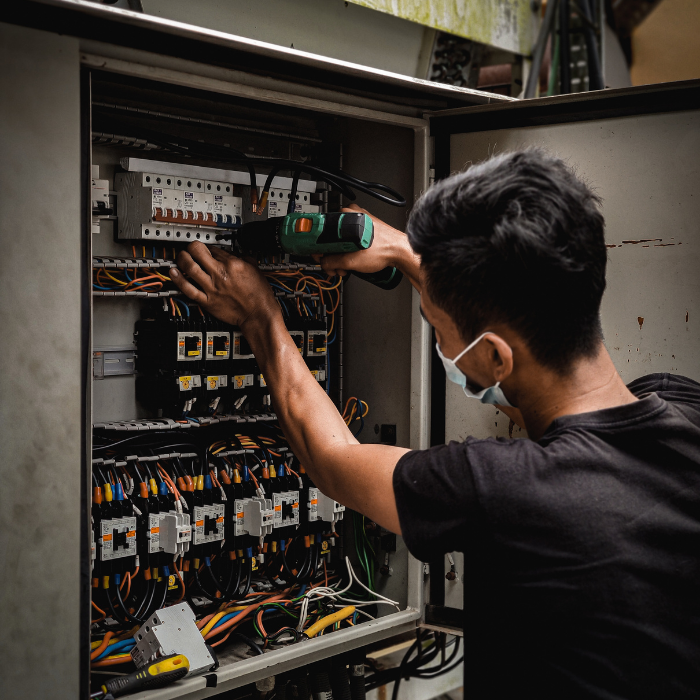
Step 1: Cut the Load and Isolate the Circuit
Overloaded circuits are the single most common reason a breaker won’t reset, especially in kitchens where coffee makers, toasters, and microwaves often share one 15-amp line. Unplug everything connected to the affected circuit, including space heaters, window AC units, and power strips, then try the reset once more.
If the breaker holds, plug items back in one at a time until it trips again. Whatever you just added is either faulty or the circuit is simply at capacity. If this keeps happening, it may be worth asking about a dedicated 20-amp or 240-volt circuit for major appliances, which cuts down on nuisance trips and reduces strain on your home’s wiring.
Step 2: Check GFCI Outlets and Look for Moisture
If the breaker feeds a bathroom, kitchen, garage, basement, or outdoor outlet, a tripped GFCI downstream can be the real reason the breaker won’t hold. Press RESET on every GFCI outlet along that circuit, including any hidden behind appliances or tucked into a basement wall.
After storms or heavy lake-effect snow, check exterior outlets and light fixtures for trapped moisture, which will trigger ground-fault protection almost every time. Dry out any wet covers and swap in proper weatherproof ones if needed. If a GFCI still won’t reset after this, the wiring behind it likely needs professional testing.
Step 3: Rule Out AFCI Trips and Arc Sources
AFCI breakers are designed to catch dangerous arcing before it starts a fire, and repeated trips often trace back to worn extension cords, cheap power strips, or loose back-stabbed outlet connections. Unplug damaged cords and low-quality strips, then try the reset again.
Avoid running high-draw devices like vacuums or treadmills on thin, long extension cords, since voltage drop can generate heat over time. If an AFCI breaker keeps tripping with absolutely nothing plugged in, that usually points to a wiring issue hidden behind a wall, which is common in older plaster homes and converted attic spaces. This is not a DIY fix. A licensed electrician needs to properly terminate those conductors.
Step 4: Look for Short Circuit Warning Signs
Short circuits behave differently than overloads. They tend to trip instantly, sometimes with a pop or visible spark at the last outlet or fixture used. Unplug everything on the circuit, switch off all connected wall switches, and try one reset.
If it still trips the moment you flip it, the fault is likely in fixed wiring, a light fixture, or a switch loop rather than anything plugged in. Watch for burn marks on switch plates, a fixture that recently flickered or felt warm, or a nail driven into a wall during a recent shelf or TV mount. Any of these mean it is time to stop and call a professional.
Step 5: Consider a Failing Breaker
Breakers wear out over time, especially after years of hard trips, and Chicago’s humidity and older panel conditions can accelerate corrosion inside the box. A spongy handle that won’t latch, a breaker that hums or feels warm even when off, or visible rust near the panel are all signs the breaker itself may need replacing.
Do not remove or swap a breaker yourself. A licensed electrician can meter the circuit, check torque on the panel lugs, and install a listed, compatible replacement. Using the wrong breaker type can void your panel’s listing and create a real safety hazard.
When Should I Call an Electrician Instead of Troubleshooting Further?
Call an electrician immediately if you smell burning, notice scorch marks, hear buzzing, or if the breaker trips instantly even with everything unplugged. These are signs of an active hazard that troubleshooting alone will not resolve.
Other signs it is time to stop DIY efforts and get help:
- Flooded basements or wet exterior electrical boxes after storms
- Aluminum branch wiring that has not been professionally remediated
- A breaker that keeps tripping no matter what you unplug
- Any visible melted plastic near outlets or the panel
What a Professional Diagnosis Actually Involves
A licensed electrician brings tools and training you simply don’t have at home. That typically includes advanced diagnostic equipment to pinpoint overloads, shorts, and ground faults without guesswork, load calculations to right-size circuits, and code-compliant repairs that meet both the Chicago Electrical Code and current NEC standards. A full panel health check also covers breaker compatibility, torque, bus bar condition, and thermal hotspots, plus documentation and permits when a panel upgrade or new circuit is involved.
Electric Work Force Inc’s electrical panel and breaker repair services start with an immediate safety assessment, followed by diagnostic testing to identify the root cause rather than just resetting the symptom.
Common Causes We See Across Chicago Homes
- Space heaters on bedroom circuits overloading during winter months
- Older two-wire circuits where one bad lamp cord trips an AFCI for the whole room
- Garage freezers and power tools sharing a 15-amp line, tripping on startup surge
- Cracked exterior GFCI covers letting rain into the box after a storm
- Aging panels with breakers that were never listed for that panel brand
Fast Checklist: Breaker Won’t Reset
- Reset it correctly: full OFF, pause, then firmly ON.
- Unplug everything on the circuit and try again.
- Reset all GFCIs in bathrooms, kitchens, garages, basements, and outdoors.
- Remove damaged cords and cheap power strips, then retry.
- If it still trips instantly or you smell burning, stop and call a licensed electrician.
Preventing the Next Trip
- Skip daisy-chained power strips; use one quality surge protector per outlet.
- Put heavy appliances like microwaves and space heaters on dedicated circuits.
- Replace damaged cords and loose receptacles as soon as you spot them.
- Upgrade old two-wire outlets to grounded, GFCI-protected versions where code allows.
- Schedule an annual electrical safety inspection, especially in homes over 40 years old.
Key Takeaways
- A breaker that won’t reset almost always signals an overload, short, ground fault, or arc fault, not a random malfunction.
- Reset the breaker correctly (full OFF, then ON) only once before troubleshooting further; repeated forcing can damage wiring.
- Unplugging devices and resetting GFCIs solves the majority of cases in older Chicago homes.
- Instant trips, burning smells, or heat at the panel mean it’s time to call a professional immediately.
- Regular inspections and dedicated circuits for heavy appliances prevent most nuisance trips before they start.
Final Thoughts for Chicago Homeowners
Working through the steps above will resolve many nuisance trips, but a breaker that keeps tripping, trips instantly, or comes with any burning smell needs a professional set of eyes. Electric Work Force Inc offers 24/7 diagnostics and repair across Chicago, Naperville, Schaumburg, Evanston, and the surrounding suburbs, so help is never far away when you need to fix a breaker that won’t reset in Chicago.
Ready to get it fixed today? Schedule an electrician near me or call (708) 968-1904 for fast, code-compliant service backed by upfront pricing and a satisfaction guarantee.
Subscribe to our YouTube channel!